

Teach Us to Pray
Transcript Read the transcript
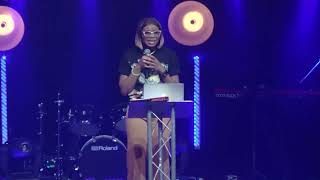
Good morning, church. How has been your week? It's been great. And how is the weather like today? Fantastic, isn't it? It's looking better and it's going to keep getting better. I'm just going to read from Matthew chapter 6. This morning, I'm wondering if you would permit me.
It looks like we'll talk to each other today. I'll talk to you then you'll talk to me. Can we do that? Because at some point I would need you to also talk to me. So we'll talk to each other. I'm reading very briefly from Matthew chapter 6 from verse 9.
I'm reading King James Version. It says, "After this man, therefore, if I go just a bit from eight, it said, Be not ye therefore like unto them, for your Father knoweth what things ye have need of before ye ask him. And after this man, therefore, pray ye, our Father, which art in heaven, hallowed be thy name, thy kingdom come, that will be done on earth as it is in heaven." Verse 11, "Give us this day our daily bread." 12, "Forgive us, our debt, and we forgive our debtors."
And 13, "And lead us not into temptation, but deliver us from evil, for thine is the kingdom, and the power and the glory, and forever, Amen." And I'll also read from the book of Luke quickly, almost in the same light, but just need to establish something quickly in Luke. And that will be from 11, also 1 to 4. And it says, "It came to pass that as we, it was spraying in a certain place when he seized one of his disciples set out onto him. Lord, teach us to pray, as John also taught his disciples.
And he said unto them, when he prays, say, Our Father, which art in heaven, allot be thy name, thy kingdom come, that will be done, as in heaven, and so in earth. Give us this day, our daily breath, and forgive us our sins, as we forgive those who are indebted to us, lead us into temptation, deliver us from evil. And he said all of that. And so I'm going to be talking briefly this morning around that word, teach us to pray. And I like the way the Luke established it.
And it says to them that after he has seized praying, the disciples came to him and then he says, "Master, teach us to pray." So maybe we're in a class session this morning. You can look into your, or turn to your neighbor and say we're in session. We're in session. We're ready to learn now.
Now what is funny about this is that the disciples had been with Jesus before this moment, several miracles had happened. Before this moment, the miracle at Cana had happened. Before this moment, a lot of miracles Jesus had happened. They had walked with Jesus. And so one will expect that those who had been with Jesus for this long time, who had seen His miraculous works, will already know how to pray.
And so what is, it's the same way we will assume that for those who come to church and who was born or baptized or who has been, you know, birthed even in church and had grown in church and keep coming every day would know how to pray. But it got to that time, the disciples knew that we need to learn how to pray because it was key, it was critical. And in Luke, the Bible says Jesus had seized the prayer and they had seen that how could Jesus had materialized so much of His power, of His presence, of the miraculous that He has transferred onto the earth and the size and wonders and lots of signatures that He has left on earth through the power of prayer. But those who followed needed to learn how to pray.
And they said, "Master, teach us to pray." One of the things I'd like us to establish first before I move a little further is that we must come to that place like the disciples came to, which is a place to learn. The journey of being a believer is never a journey like the academics. While you become a master in a particular field of study, we will always need to come back to the master's feet to say, "Lord, show me how to do this. Teach me how to do this.
Help me to do this." The disciples were vulnerable. They did not assume that because we have seen Jesus perform so much of this miracle, because we've seen him turn water to wine, we have known it. And Jesus was walking by a principle, always walking by a principle. And he says, "Teach us to pray."
And they didn't say, "Lord, show us your miracle." They didn't say, "Show us your hand." They said, "Teach us to pray." Because they've seen the hands of God. They've seen Lazarus woken up. They've seen the water turn to wine. I want things critical.
They know that if they cannot pray, they cannot function. The journey that the disciples were on was a journey in which they needed to carry the power and extend it to us, which we have today. And if we must function, we must know how to pray. If I cannot touch heaven, earth, the power of God is all around prayers. And that is the way to the heart of God.
And so prayer is not optional. In the journey of being a believer and as a believer, prayer is not optional. You know, there are informations that you will have to fill and then there are places where they will put optional. It means it's not important. But as a believer, at the point of us following and manifesting in order for us to function, we must learn how to pray.
Because this is the mode of communication. And so the disciples were willing and they were ready to learn. And so this morning we're just going to be unpacking the principles of prayers. And the first thing the Father said to them, or Jesus said to them, was our Father, which art in heaven, hallowed be thy name. I'm sure the disciples must have been surprised that our Father, you had done miracles, you have healed the sick, you've raised the dead, you could show, you know, you've met the needs of people, but the first thing Jesus said is our Father.
And one would think, why is the petition not coming first? He says, our Father, not the God who tolerates me, he says our Father. And there's one principle I want us to pick there, because the disciples were already sons of God, they were not strangers. When someone comes to your house and knocks as a stranger, one of the things you expect to do if you have a lock or if you have a ring by the, you expect them to ring, don't you? Or at best, if you don't have that, you expect them to knock and knock well enough for you to open.
And when you open, you expect them to wait for you to say, come in, right? But what happens when your son comes through that same door? Do you expect your son to wait to be told come in? The son has got a key to the house. He has a room, he's got a bed, he's got a space, he's not a stranger.
So he has access. And so he says, our father, you belong to the kingdom. You're not a stranger. And this is how we need to treat prayers. When you need to come in, understand that you're coming into the palace of the king in which you belong. You have a stake.
You're a shareholder in the scheme of things, meaning you sit on the board and you dialogue with him. So there is this level of confidence when it's all there. Our Father, which is in heaven. It is not him that tolerates you. It's not him that someone else told me.
It is our Father because from the beginning, why is it our Father? The Bible says from the beginning in the book of Genesis 1 it said in the beginning, God. Everything that started in the beginning was God. And by the time it came down to the New Testament and Jesus had to die for us and the Bible says he brought us back to him, redeemed us and we became joint heirs with him. And so it means that we now have a seat on the table with him.
We have access. And so there's a confidence when you say our Father, it is not a common word. It is a word that brings you to the person that you are familiar with. You know him. The consciousness I'm awakened this morning is that gets familiar to know that you can communicate your heart to God and he will listen.
It is not an anthem when Jesus said our Father, which is in heaven, is saying you have a place in my heart because my son can open the door. He's got the key. He can come in. I don't have to say come in. He can go and sit on the chair. I don't have to say take this space.
If he needs a meal, he can go to the kitchen. If one is already not prepared and thank God, God has prepared a table for us. Always a table. So the consciousness that we've got access is important. And that reposition you, you are no longer a beggar at the gates, you are not a child at the table, there's a difference.
And that's what I said, between the someone who knocks at the door and the stranger, you walk directly to the house because you belong here. I like you to say I belong in his presence. And maybe you need to say it again to yourself to be sure I belong in his presence. So every time you need to come into his presence, do not feel do I belong here? Am I even a son?
How am I qualified? The Bible says as long for as many that believed in his name, as many that has confessed, as many that is joined with him, give them powers to be called the sons of God. You are not a slave by the gates. You're a son. And so you have a stake.
And so every time you need to channel or you need to come to a place of prayer and you say, my father, I wanted to make meaning to you that you're speaking to a father that would carry you any day. That would not turn his back on you. But notice what Jesus said there. He said, "Hallowed be thy name." Now this is where you get a bit.
Why are you praising him before you know ask anything? You know, why don't I just say my father? All I need now is for you to, I mean I've seen that posted several times. My father, why don't you give me the money I need in 20 years time? Just give me my 20 billion that is saved in heaven.
As interesting as that sound, praise is part of the prayer, it's not different from it. Worship before petition and this is the principle that I laid next that I want you to submit that worship is not a warm up for prayer, it is actually part of the prayer. And so every time we worship and every time we're ready to start the service and you hear the songs being lifted, we are already, we are not warming up, we're already getting ready to sit with him because every time you pray, every time you worship, every time you touch the heart of God and it gets familiar with you and with us as a community. And so I'm saying that worship is prayer. When you hollow the name, when you exalt the name of God, you declare who He is before you declare what you want.
You declare who He is. You can't go to the king without understanding that He is the king. I'm even talking about earthly king. You won't walk into the door of the king without acknowledging that He is king. And that is incomparable to who God is. He is God all by Himself.
And so when we hollow His name, when we worship His name, we are declaring His Majesty. We're declaring who He is. Our needs is secondary because in Him our needs are infinite. They are just very little, limited. What God can do is beyond my petition.
And this is what Jesus was teaching them. The Father is much more than the demand that you want to bring or that bothers your heart. He is more than that. And Paul had words when he said, "He is able to do more, much more above." And I say here that because how big you make God in that moment determines how small your problem becomes.
God must always be the focus because he is bigger than every problem, bigger than every situation. And we're going to demonstrate it in 15 seconds from just where you are, I like it to hallow his name. What does he mean to hallow his name? Call him his name. Akmolich that is God.
I like it to close your eyes and just call him his name. I say you are God by yourself. From beginning to the end, from the beginning of time till the end, you that see the beginning, you that see the end from the beginning, you are God by yourself. You are great in all your ways. Father we thank you.
And he says, "It proceed forward." He said, "Thy kingdom come, there will be done, give us this day our daily bread." So if we look at it for one moment, Jesus is teaching the disciples a divine sequence in this prayer. So before you bring your personal list pray for God's agenda that his kingdom would always come. Because in the midst of your agenda you may even be limiting the plan of God.
You're praying for a loaf of bread but in his will you've got a bakery that produces bread not just for you but for much more for many others. But because we are limited all we think of is today. Why don't you pay his kingdom come? In his kingdom is his will. So before our personal lists we need to pray for his will.
Human mind speaking is very hard because we've got needs, we've got demands, we've got situations. But when we understand the principle that Jesus laid in this sequence, we understand that our needs are already subsumed into his kingdom. And because he had promised not to fail us, never to fail us, not forsake us, every time you call that his kingdom come, your needs are short. And it is so sure and certain that there will be modern meds. Paul prayed, he said, that I may know him and the power of his resurrection.
In knowing Jesus is walking alongside in his will and in his purpose. And so here is praying for the agenda of God. When you pray the kingdom first, your needs get answered faster. And that's where somewhere along the line he says, that seek he first the righteousness of God. And he's, he says seek he firsts and his righteousness and every other thing will be added.
Seek he first the kingdom of God. And this is why we need to pray the kingdom prayer, that thy kingdom come. Every time we pray that thy kingdom come, we are praying, Lord, let your majesty reign, which includes our situation. Let your will be done. And that is a priority for us to write in the agenda of heaven.
And now after the priorities, Jesus addressed our daily provisions, but listen, it did not say, unlike what I said in that post that give me everything I need for 20 years, Jesus said, give us a daily bread. And the reason for daily bread is because God can always and will always be our source. It is not the government. It is not the policies because all of that can change. But one thing is certain, it's a God is the same yesterday, today and forever policies change.
Government come and go, but God remains as your sustainer. He that can heal yesterday can heal today. So he says, our daily bread. And I like the way the psalmist put it. He said, they are new every morning. Great is your faithfulness. Because every morning when we wake to God, I will say, God, today give us our daily bread.
It is not what I've stored yesterday because that is, it may be still. Remember, we pray the kingdom agenda and then we bring our petition just for today because God is able to sustain us on a daily basis and he wants to do that. And this is why when we were compared to the ship in the Bible and you talked about the parable of the ship, right. Do you know how it is, if you imagine the ship for instance and the shepherd, the ship do not worry what they will eat. The next morning, no, the shepherd worries about that.
The shepherd keeps plan of that, not the ship. And then you lead them to the path and then they feed and they go their way. The next morning, the shepherd leads them and this is exactly how God becomes our sauce on the daily basis. And we must be careful not to make man our sauce. We must be careful not to make man our sauce.
And this is why if you are confident to call him Father, be confident to tell him, "Lord, give us a daily bread today. Give us your provision." Because what you had yesterday in the will and in the agenda of God, it's not likely what he wants you to keep for today. Because his mercies are new every morning. And I like the way the sermon is put it.
It said, "My de Lord is my shepherd. I shall not want." Because it is not for us to worry. The shepherd will sort it. And this may be tongue twisting for you. In Yoruba, there's a way we call God. I will say, "O Lord, look we see." And what it translates is to "Ewu hones heaven and who is our provider."
You can say, "Jehovah Jairah." God our provider. God our source. And if we proceed further in that sequence, He then says, "Forgive us at depth." Lead us not into temptation. Now we've come to the parts of the prayer that I want everyone to pay attention to.
Jesus is teaching us in this part because there are two things here. Forgive us as we forgive those which trespass against us. So there are two requests here buried in one. There is one going upward and there's another one coming downward as we forgive others. Forgive us.
And it's a consciousness that is building in our hearts that you've got the license, you've got the space, but you forgive others. You seek forgiveness. You will have forgiveness. God is willing and able. I would always forgive, but he's saying as we forgive others, it means we need to forgive as well.
And this is a part of the race that is important, that demands something from us, from the beginning of that prayer, almost all of it has been on God, but he's giving us a condition as we forgive others. And so he's building a consciousness in us, in our race as believers, that we must always forgive others. It can really be difficult, forgiveness. You can really be deeply hurt. It's possible to have been betrayed.
It's possible to have even been dejected, called names, but he still said we should forgive others. Because we also want forgiveness. And this morning I want us to be conscious of it. That God is demanding from us to forgive. He is willing and able, always able, to forgive.
But he says as we forgive others, we trespass against us. I doubt there's anyone on earth that you would not find someone hurt you, or someone disappoints you, or someone says something bad to you, or someone hurts your feelings. And humanly speaking, it is okay to feel hurt. But God is saying we must forgive, even in the midst of our hurt, in the midst of our disappointment. Because we always want to have license and opportunity and that plain mind to be able to say, Father, I have come.
Let's not come with a baggage. Come with an open heart. As we forgive others. Which respite against us. And our unforgiveness is not hurting the person who wronged you. It is shutting the door between you and God. Because imagine, he says, forgive us, Lord.
He said, as we forgive others. I want you to take a few seconds to just think. You and I, do we need to forgive anyone? Is there someone you need to forgive? Is there someone in your heart? Because in this prayer, forgiveness is key. And then you were genuinely wrong, deeply hurt, but open your heart and release to forgive.
And this is the other part, it's a lead us not into temptation but deliver us from evil. This is a prayer of divine navigation. And this is saying, God, don't just save me when I fall. Guide me so I don't even go near the trap at all. And this is what God is able to do.
God is not able only to answer us when we are in the pits. He's able to guide us, not even into falling to the pit at all. It's a lead us not into temptation, deliver us from all evil. It did not say from some, from all evil. He is able, he is powerful, he is, he's possible for him to guide us and lead us through.
That we know what to say per time, that we avoid when we need to go out in the midst of a bloodbath, God is able to take us out of it. He's able to lead us away from the path of fear and bring us into the path of faith. And this is not what social media is able to do. Social media is able to lend and pour fear in you for every news and for every scroll and for every reel, you don't want to leave the house the next morning because you are just afraid. Almost every nation is thrown into one thing or another.
But in the midst of this, God is able to deliver us from all evil. And again, I'd like us to pray and just put your hand on your chest and say, "Lord, deliver me from all evil." Say, "Lord, deliver me from all evil." And so every time we will go back to this prayer when we finish, they will start making meanings. They are not just anthems that were spoken.
These words are sequences that mean life and they are important to our Christian ways. And the end of that, why the band comes up. And when he was bringing this to an end, he says, "For thine is the kingdom, the power and the glory, forever and ever, Amen." Jesus closes this prayer the same way he opened it in worship. The first acknowledgement was our Father acknowledging God.
The last part of it is for thine is the kingdom, you own it. Even when my petition is responded to or not responded to, you own it. Thine is the kingdom. If I become a shining star and a shining light, it is your glory. It is your kingdom. It is not for my showmanship.
Not the politicians. The kingdom is yours, Lord, and the power, not my power. And this is the part I love the most. It's not my glory. It is not my power. It is your glory. Because every, the glory goes back to God. Thine is the kingdom. For every testimony, thine is the kingdom.
From every successes, thine is the kingdom. For every business success, thine is the kingdom. When you pass the exam, it is for your glory. God gets the credit. God gets the praise. God gets the glory.
New here? Plan your visit — Sundays 11am at Alive House, Norwich.
Keep watching
You might also like

As Far As Your Eyes Can See
Scared of the Dark

Where We're Going, We Don't Need Roads

Nobody Calls Me Chicken

It Runs on Rubbish

Time Circuits On

1.21 Gigawatts

Comments (0)
Leave a Comment
Have an account? Log in to post instantly.